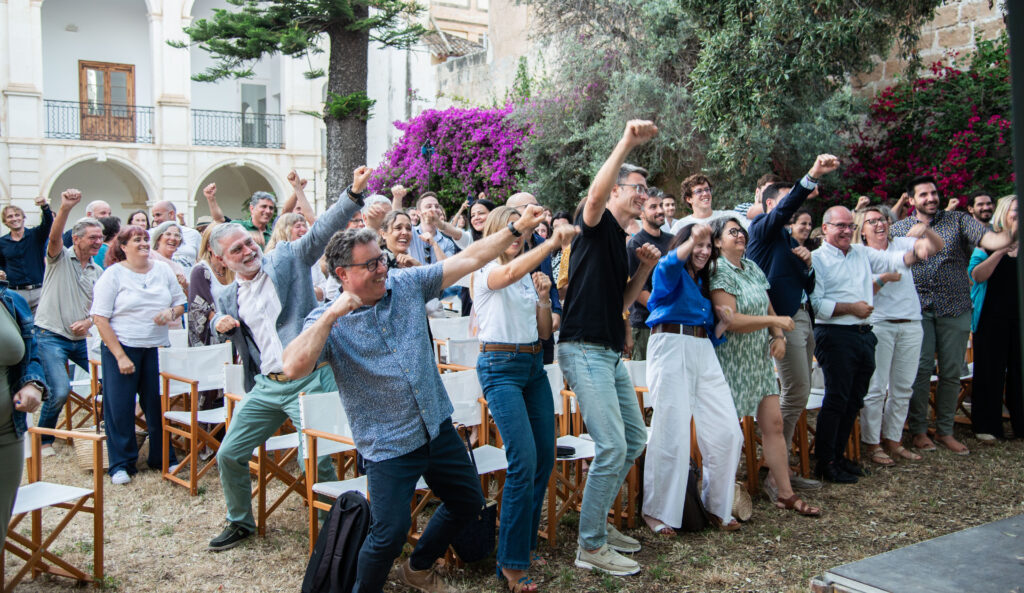

The ARTEMIS Final Conference opened on 8 June 2026 in Menorca, one of the project’s four pilot sites with a full day dedicated to science and exchange. The morning brought together researchers, partners and invited experts for an in-depth research workshop exploring the scientific foundations of ARTEMIS’s work across the Mediterranean (read the full recap here). What followed, was a moment of collective reckoning: with what the project had achieved, with what the Mediterranean still needed, and with what would have to come next.
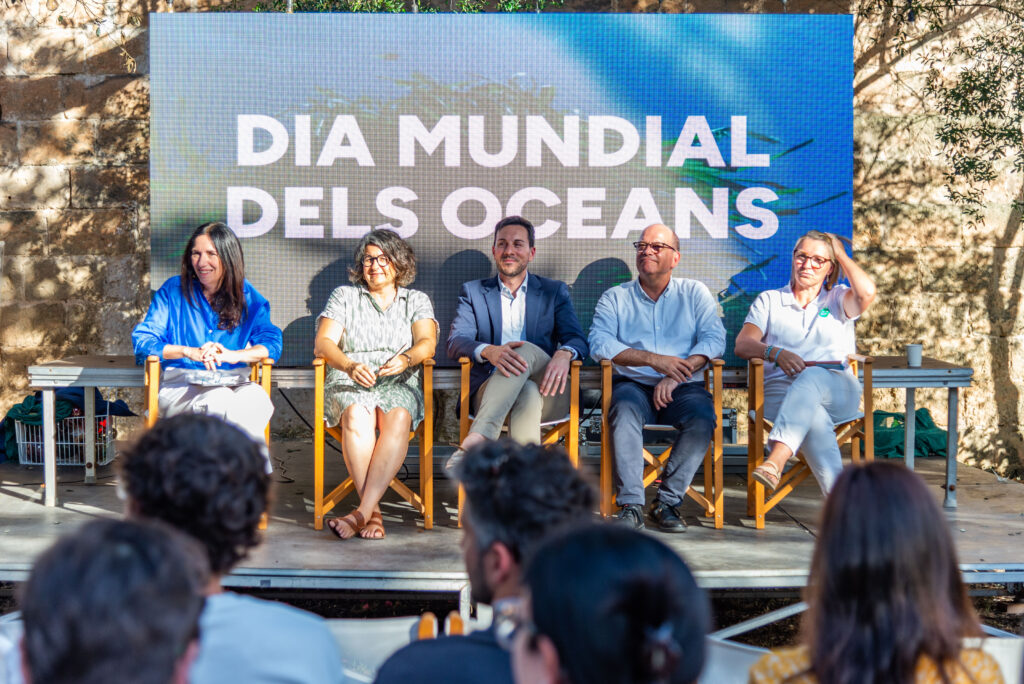
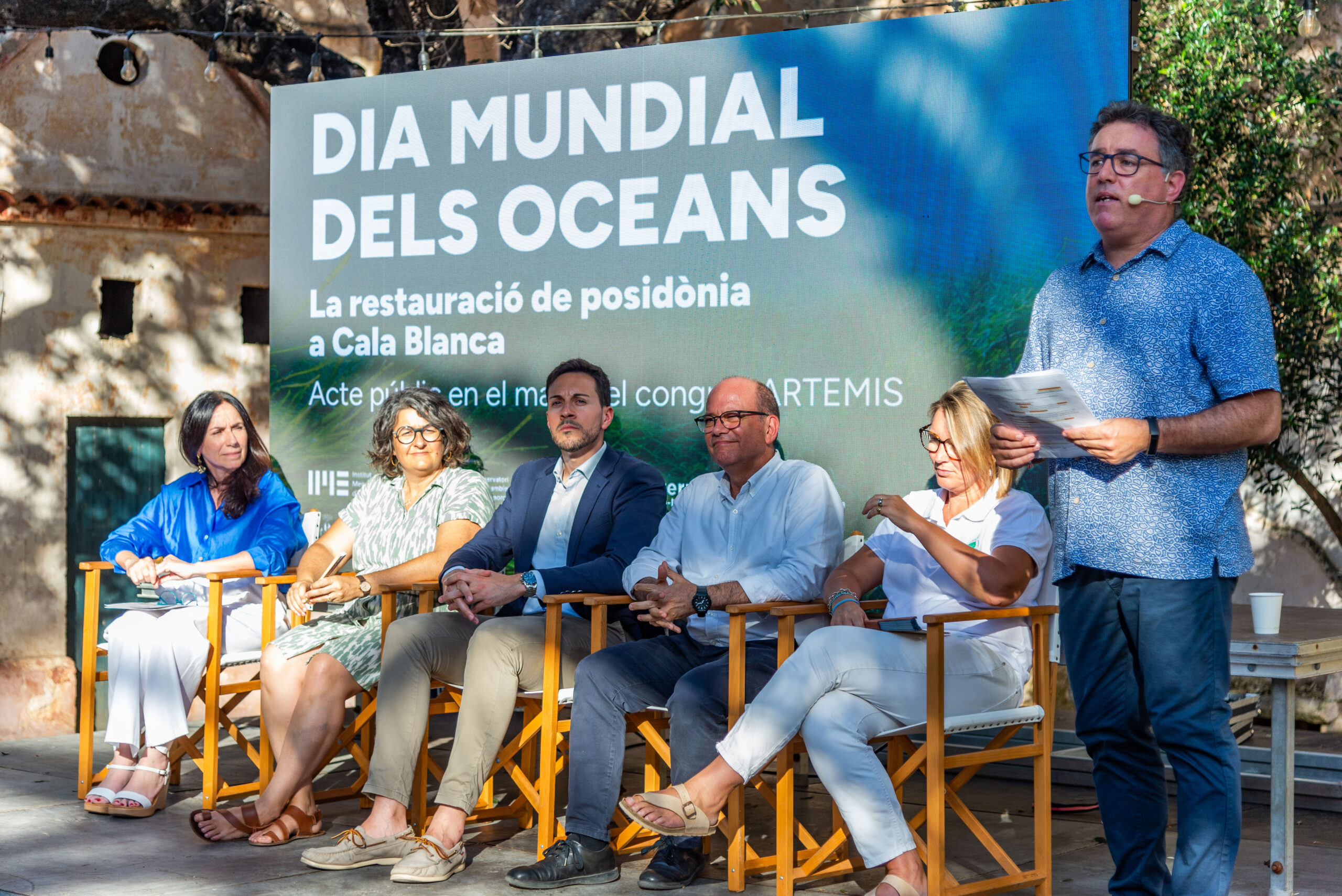
As the sun settled over Ciutadella, the conference opened its doors to a wider audience in the museum of Can Saura. Citizens, local authorities, researchers and environmental organisations came together for an evening centred on the ecological importance of seagrass meadows and the role that restoration can play in addressing biodiversity loss and climate change, while strengthening the communities that depend on healthy coasts.
8th of June was deliberate timing as the world celebrate in union Ocean Day. ARTEMIS grounded the gathering in urgency, reminding everyone present that protecting the sea is not a technical exercise but a shared responsibility.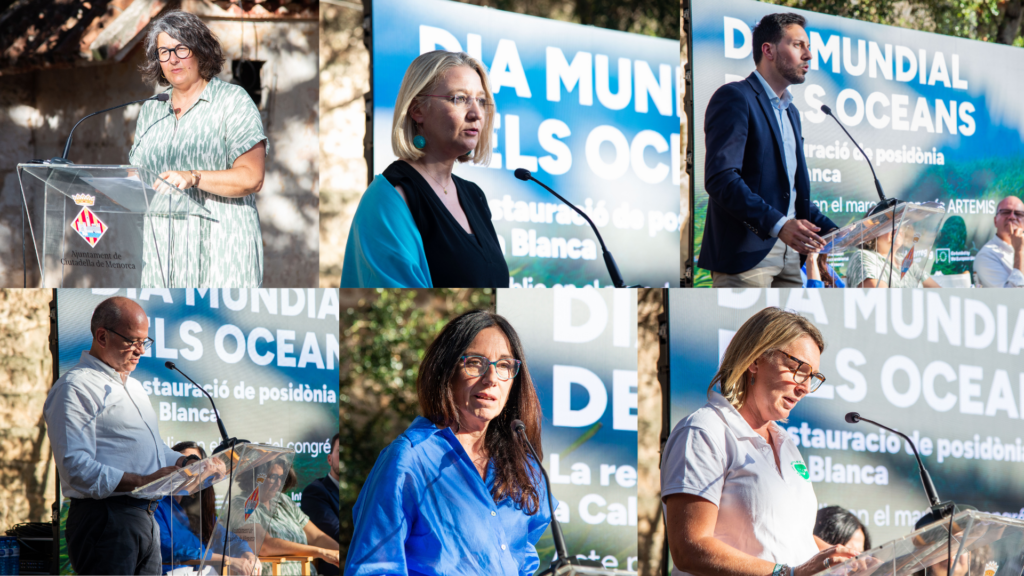
The evening was shaped by voices from across scales and sectors. Moderated by David Carreras Martí of IME-OBSAM and contributions came from Maria Jesús Bagur, Mayor of Ciutadella; Joan Pons Torres, President of the Institut Menorquí d’Estudis; Ana Torres of the Government of the Balearic Islands; Simón Gornés of the Menorca Island Council; Ioli Christopoulou of The Green Tank; Rebecca Morris of Menorca Preservation and Oscar Serrano of IMEDEA. Together, they underlined what ARTEMIS has always understood: that restoration is not only a scientific undertaking, it is a civic one.
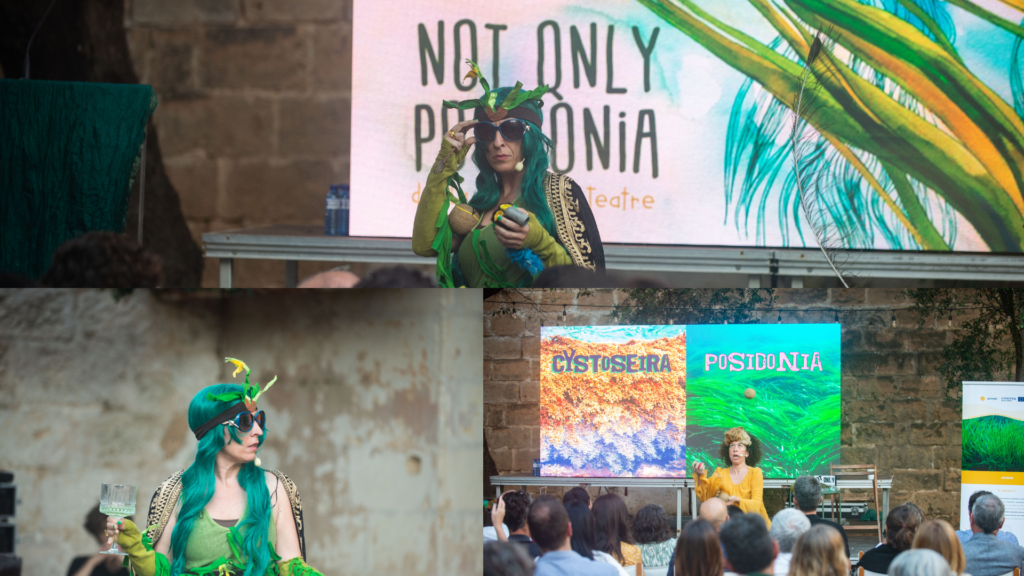
The evening closed with something altogether different. A creative spectacle that we called ‘Not only Posidonia‘ made by “La Revoluta” brought Posidonia oceanica and Cymodocea nodosa – the two seagrass species at the heart of the ARTEMIS project- to life on stage. Through movement and imagery, the performance traced the quiet, ancient relationship between these underwater meadows and the sea that holds them: their patience, their fragility, their extraordinary capacity to shelter life and their importance. Interpreted incredibly in a blend of Spanish, English, French and Italian. It was a reminder that what science measures, art can make felt. The audience, full of eperts, scientists, authorities but also local community left with laughter in their hearts and the ocean on their minds.
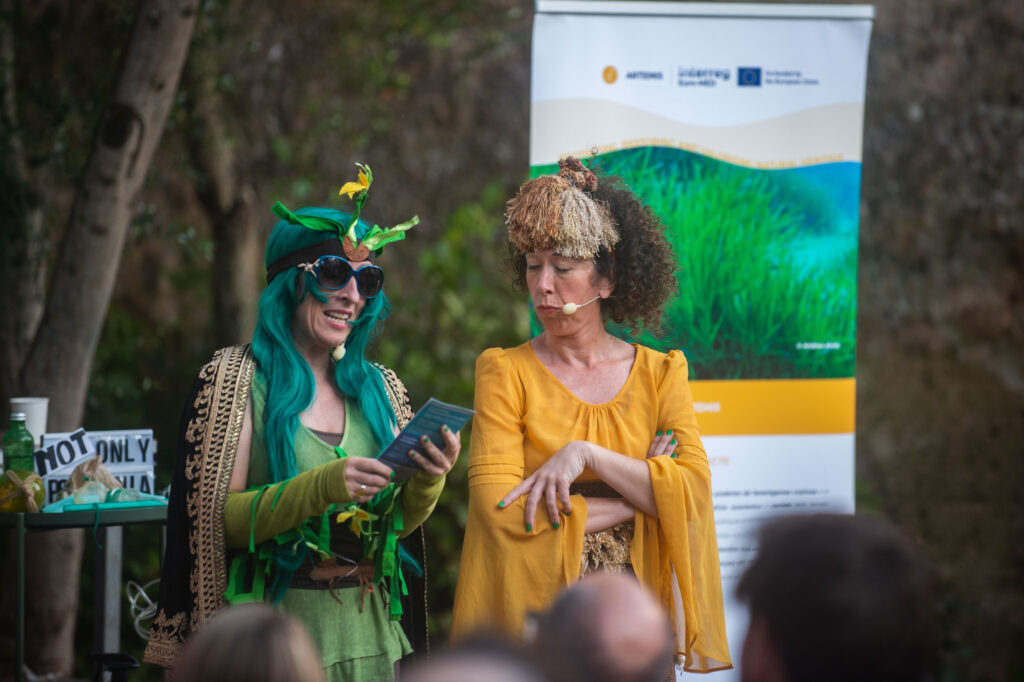
Sara Agramunt (alias Cymodocea) and Ana Pedraz (Queen Posidonia) – “La Revoluta”
A warm thank you to all the local and regional partners who made this gathering possible: our project partner Institut Menorquí d’Estudis IME-OBSAM for organising all the aspects of this conference but also to their partners the Municipality of Ciutadella, the Government of the Balearic Islands, the Menorca Island Council, Menorca Preservation, and Club Nàutic de Ciutadella.