What we achieve
In the ARTEMIS project, we aim to restore and conserve seagrass meadows in the Mediterranean by implementing innovative restoration protocols and integrating ecosystem service values into financial and policy frameworks. Our achievements include the successful rehabilitation of seagrass ecosystems, enhancing their biodiversity and ecosystem services such as carbon sequestration and coastal protection. Furthermore, the project aims as well to influence environmental policies through integrating ecosystem values and engage diverse stakeholders, fostering collaboration.
Library
REPORTS
STATE OF ART REPORT ON INVESTMENT OPPORTUNITIES IN SEAGRASS RESTORATION
Restoration roadmap and pilot sites
SEAGRASS RESTORATION ACTION PLAN
Policy Recommendations for Seagrass Restoration
Pilots Ecosystem Services Baseline
Guide for stakeholder engagement and communication
SEAGRASS POLICY RECOMMENDATIONS ROUNDTABLE
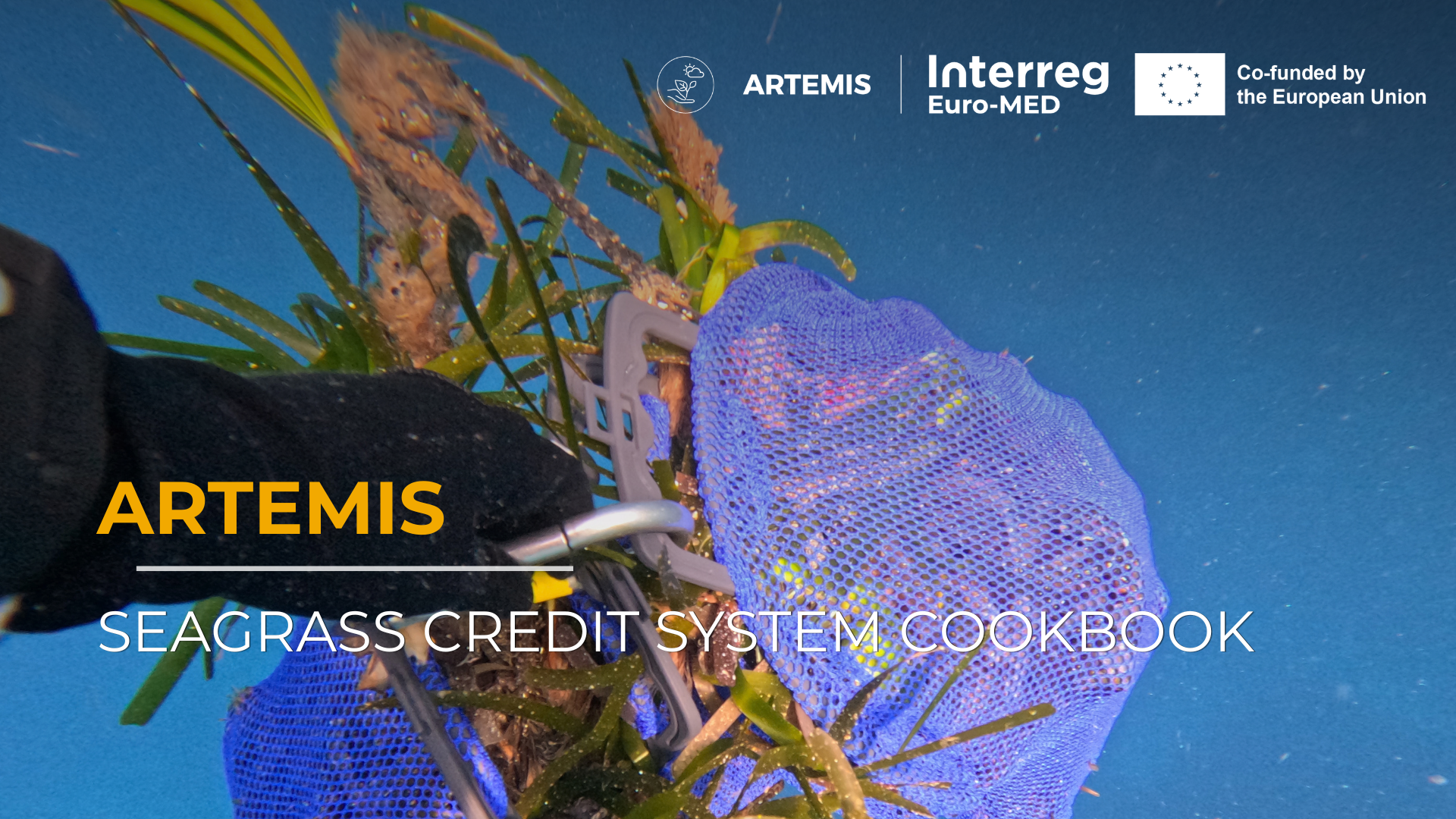
SEAGRASS CREDIT SYSTEM COOKBOOK
Investment Roadmap for Corporate
PEER LEARNING REPORTS
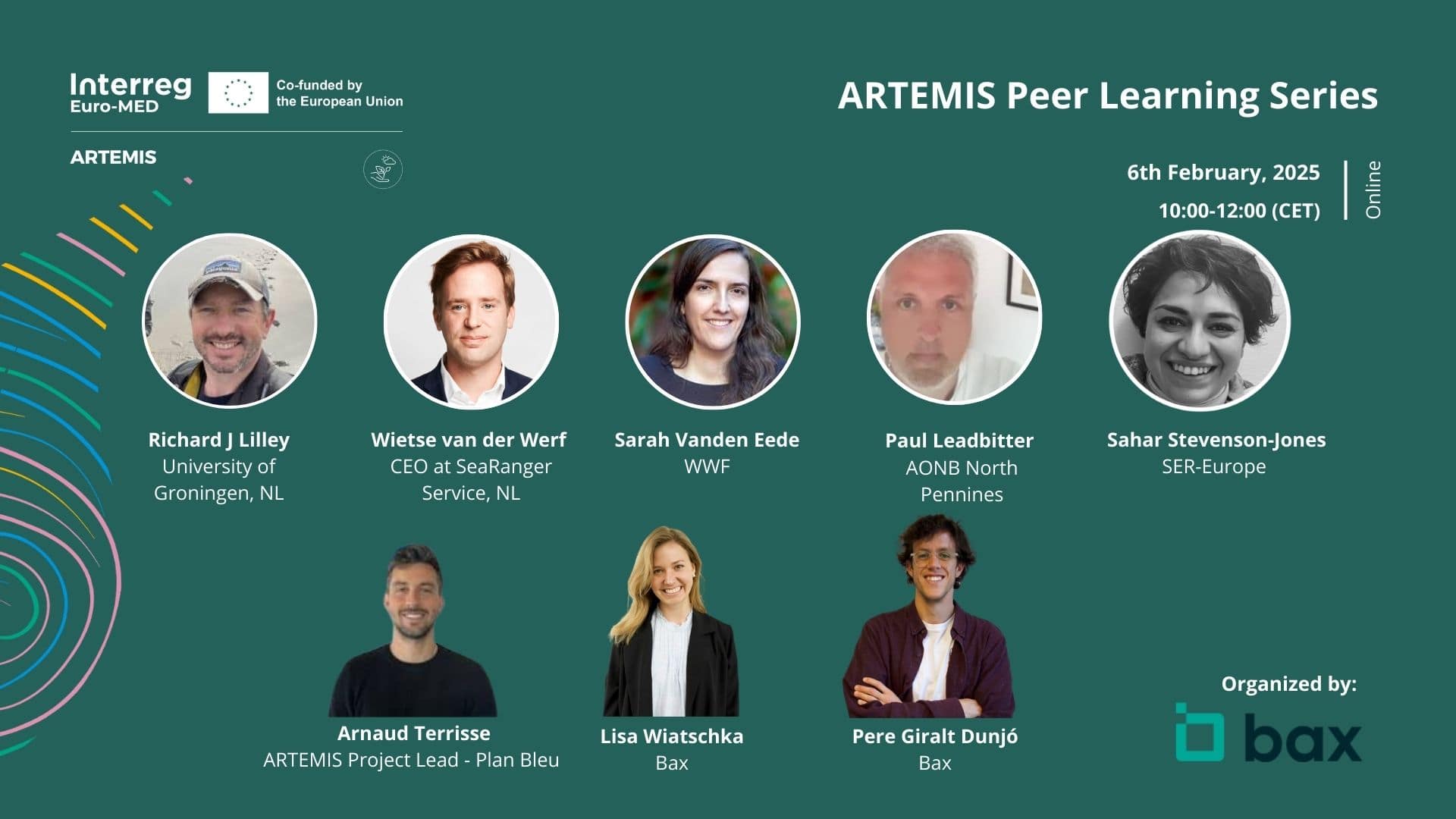
ARTEMIS First Peer Learning Session
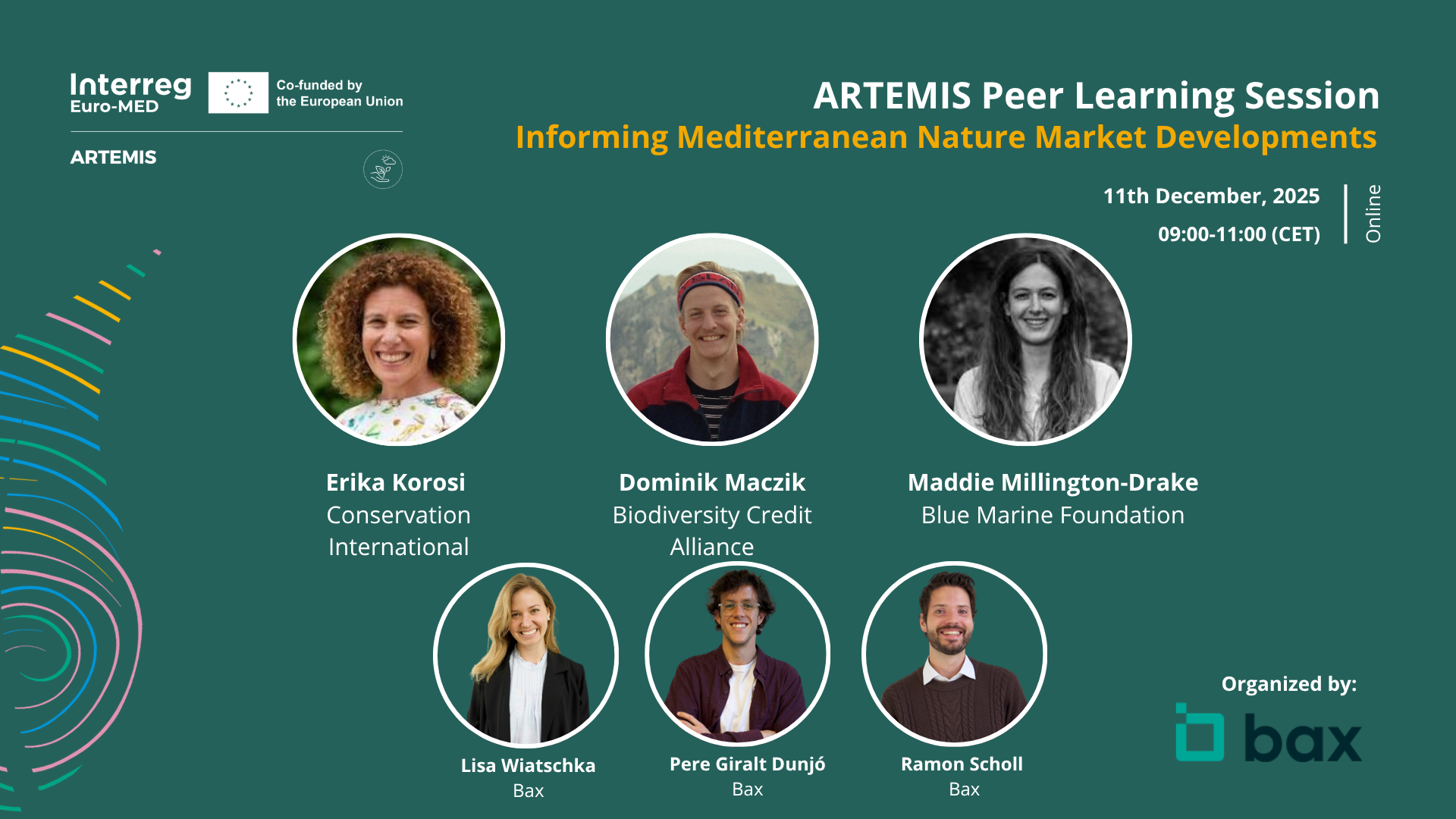
P2P report: Beyond Blue Carbon: Lessons
Learned from Nature Credits
Scaling Financing for Seagrass Restoration in Europe White paper
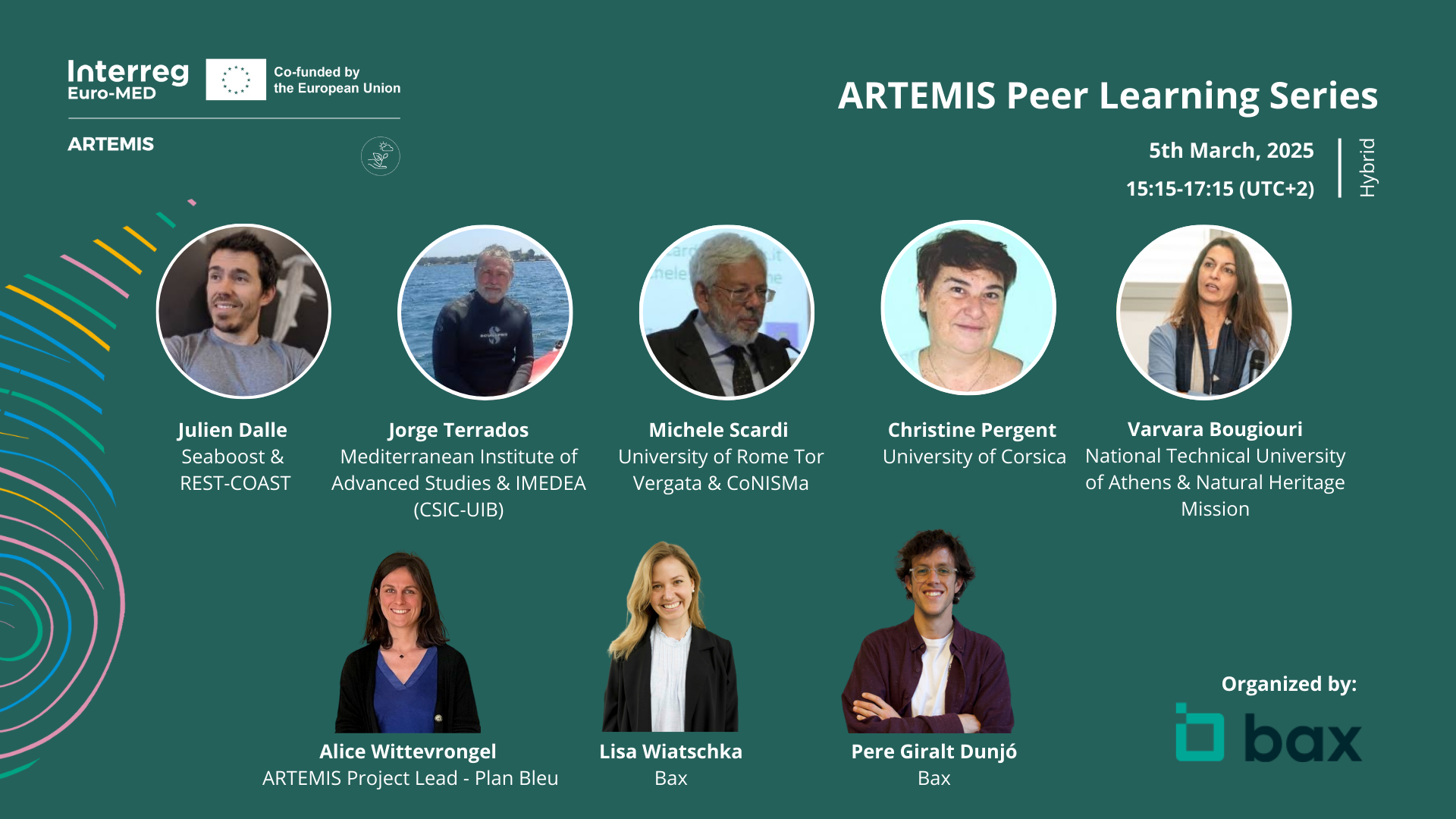
ARTEMIS Second Peer Learning Session
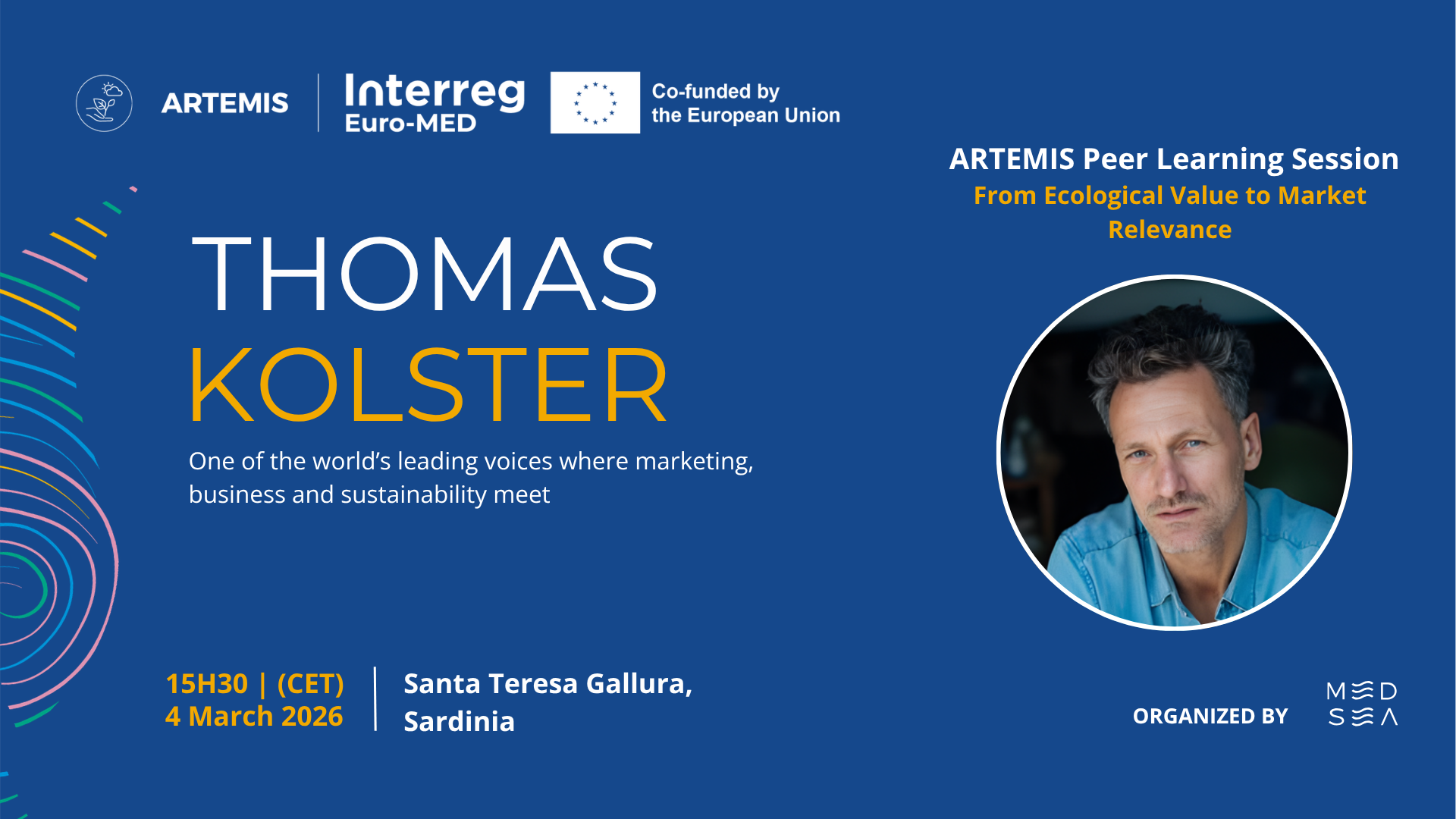
P2P report: Building a Relevant Platform for Seagrass Restoration
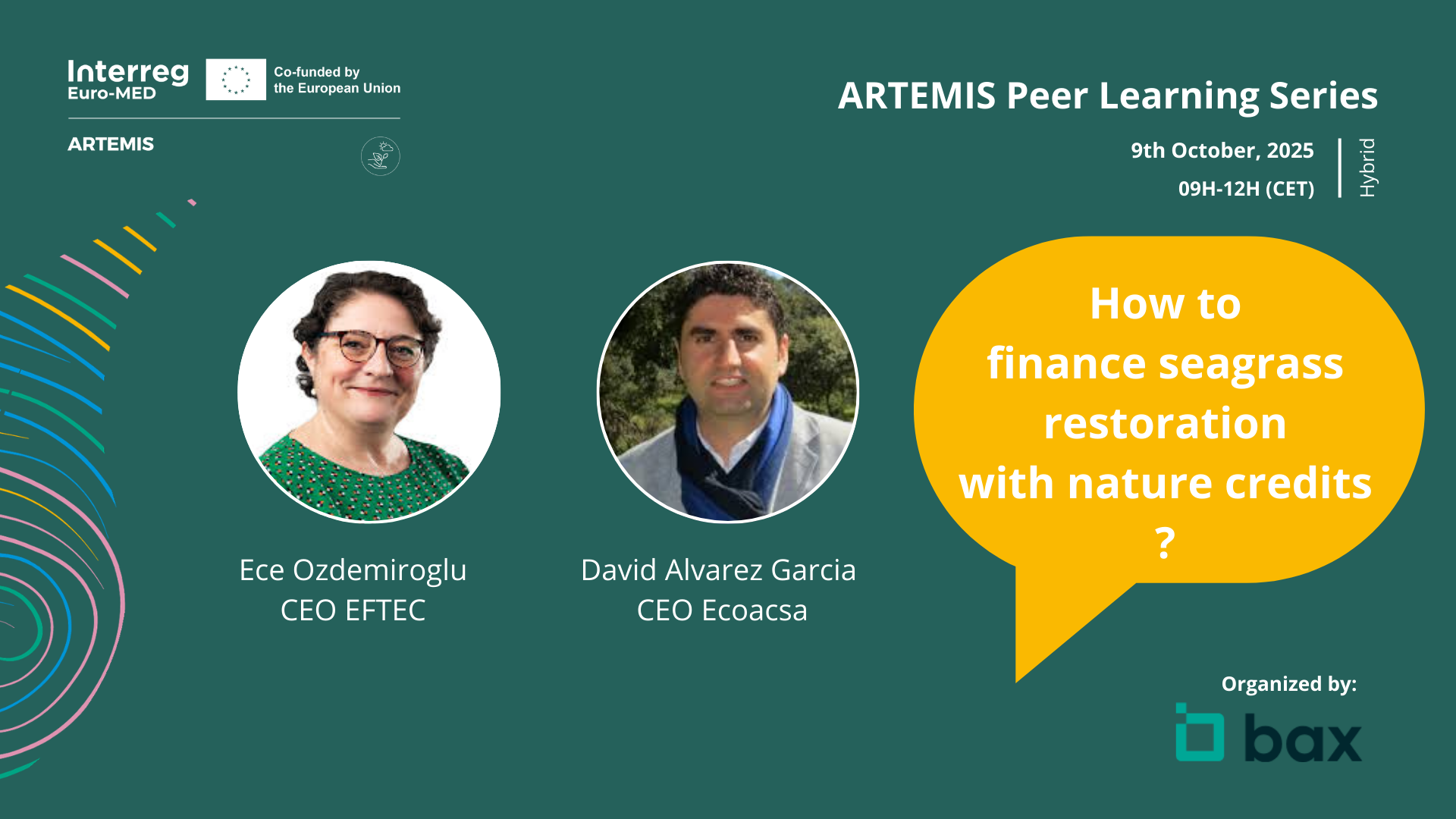
How to finance seagrass restoration with nature credits?
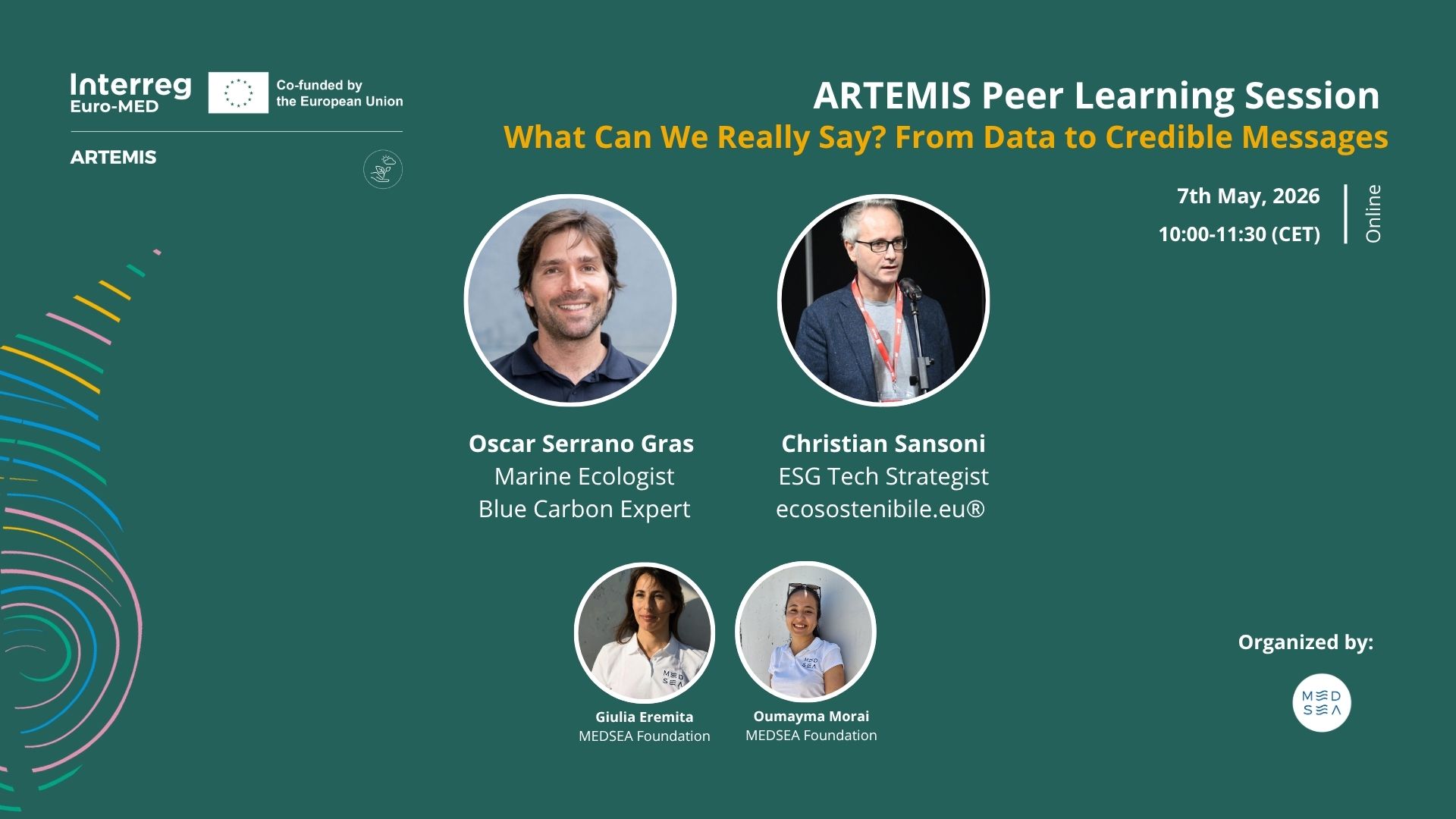
P2P report: From Science to Market: Nature Credits for
Posidonia oceanica
Objectives

- Implementation of innovative restoration protocols to rehabilitate damaged seagrass ecosystems in the Mediterranean;
- Strengthening ecosystem services such as carbon sequestration, coastal protection, and support for marine biodiversity, contributing to the overall resilience and sustainability of the coastal environment;
- Influencing environmental policies and decision-making processes at local, regional, and national levels;
- Involvement of diverse stakeholders, including public authorities, NGOs, research centers, private sector, and local communities to increase awareness on seagrass meadows;
- Development of replicable and scalable models for seagrass restoration that can be applied in other regions.