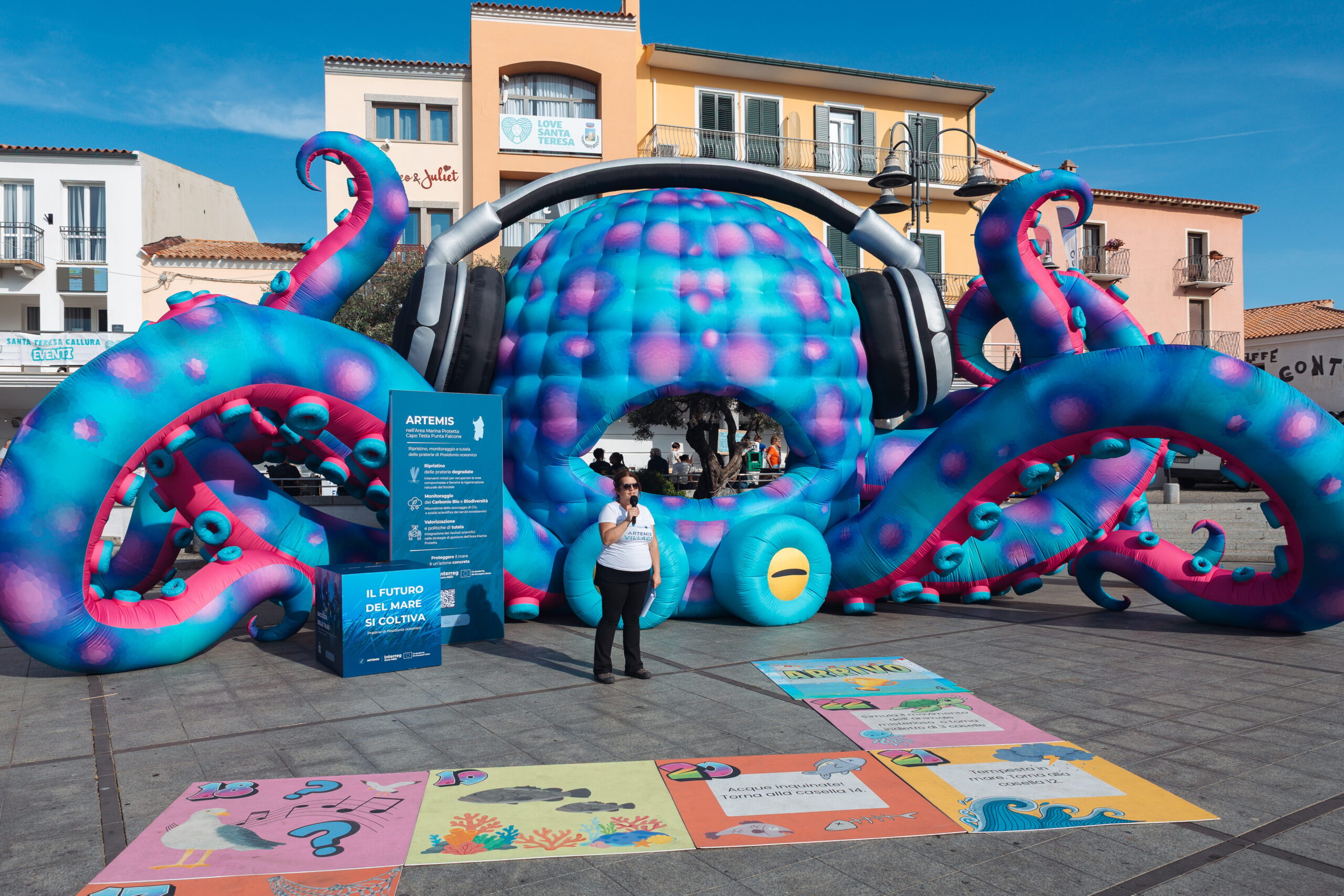

From 30 May to 1 June 2026, the ARTEMIS project met the local community in Santa Teresa Gallura through ARTEMIS Village, a three-day educational event dedicated to Posidonia oceanica, seagrass restoration and the protection of Mediterranean marine ecosystems.
Held in Piazza della Libertà as part of the Primavera in Gallura programme promoted by the Municipality of Santa Teresa Gallura, the initiative was organised by the MEDSEA Foundation, ARTEMIS project partner, with the support of SEMATA Cooperative and in collaboration with the Capo Testa – Punta Falcone Marine Protected Area.
Santa Teresa Gallura is home to one of the four ARTEMIS pilot sites, where restoration activities are being implemented to support the recovery of Posidonia meadows damaged mainly by boat anchoring.
Connecting Restoration, Science and Public Engagement
ARTEMIS Village was designed to make the project’s scientific and restoration activities accessible to a broad audience.
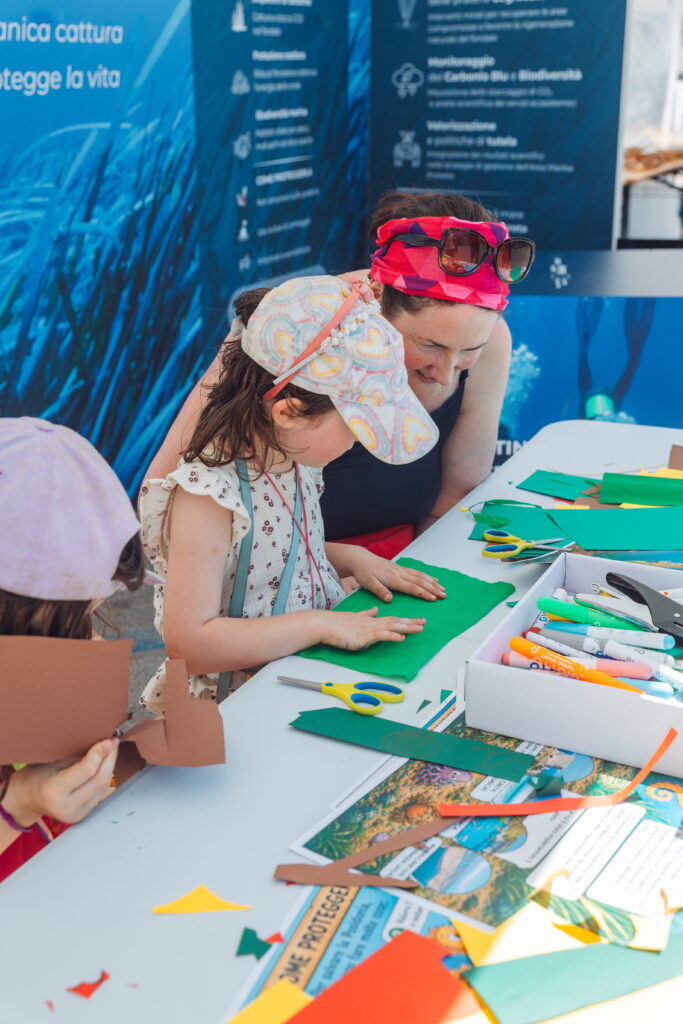
Over the three days, children, families, local residents and tourists participated in workshops, games, screenings and educational activities exploring the ecological value of Posidonia oceanica, the pressures affecting its meadows and the behaviours that can contribute to their protection.
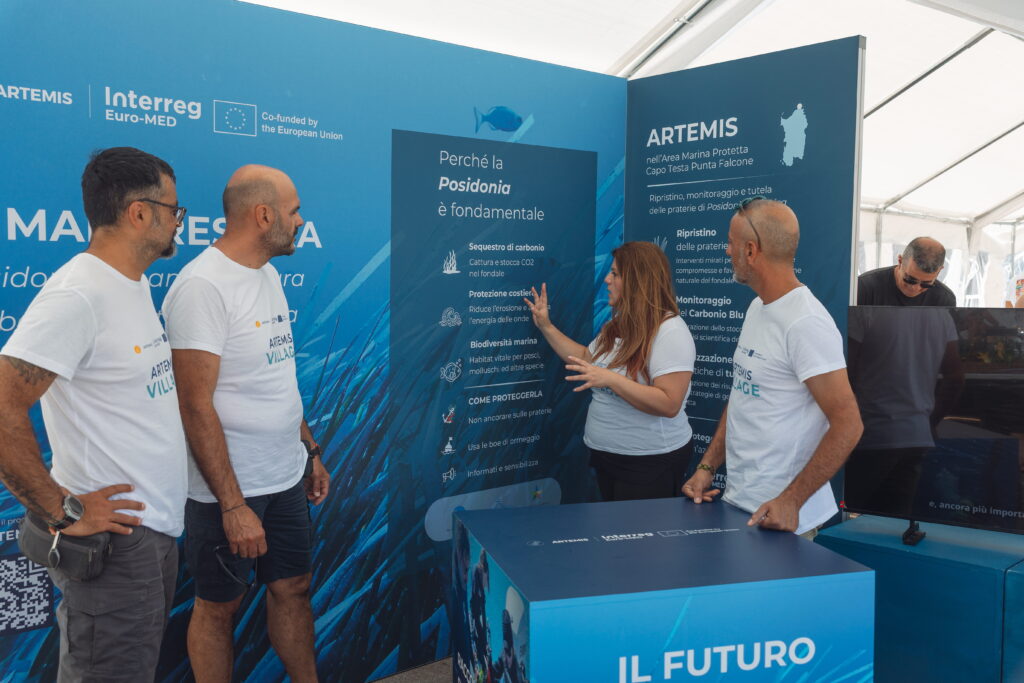
The ARTEMIS information stand presented the project’s objectives, the restoration work carried out across its Mediterranean pilot sites and the scientific monitoring activities supporting the recovery of seagrass meadows.
A video documenting the work implemented in Sardinia was also screened during the event, offering visitors a closer look at the restoration process taking place within the Capo Testa – Punta Falcone Marine Protected Area.
Learning About Posidonia Through Play
One of the main activities was the educational workshop “Regenerate the Posidonia Meadow”, involving children aged between 6 and 12.
Participants learned that Posidonia oceanica is not an alga but a marine flowering plant, and explored its role in producing oxygen, storing carbon, improving water quality, protecting coastlines from erosion and providing shelter and food for hundreds of species.
During the workshop, the children contributed to the collective artwork “PosidoniAMO”, creating a large Posidonia meadow populated by colourful fish. The installation provided a visual representation of the biodiversity supported by healthy seagrass ecosystems.
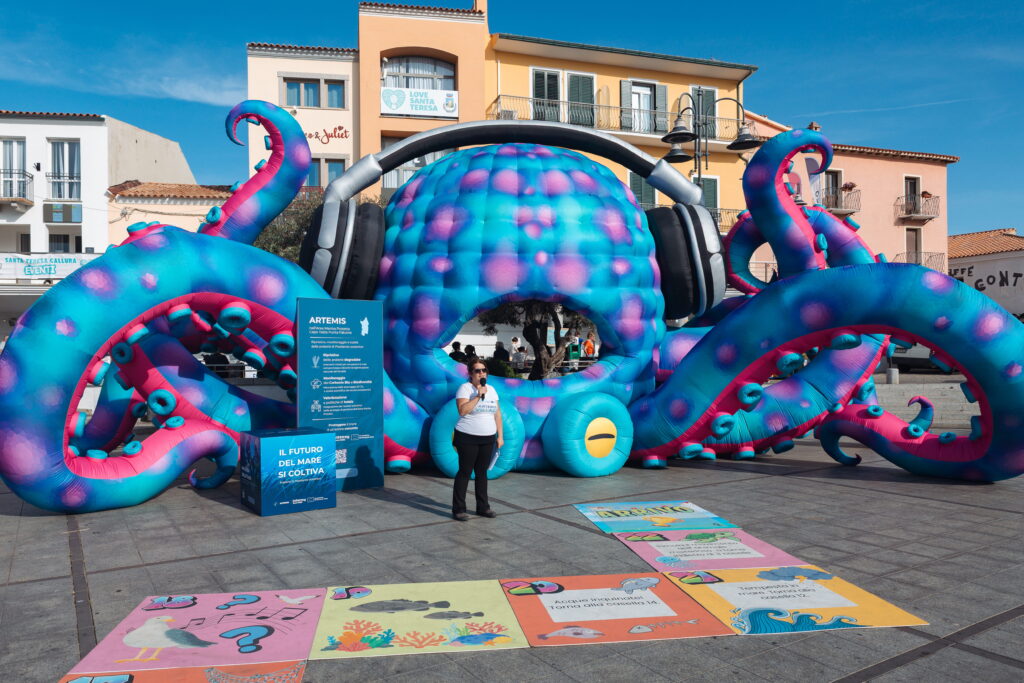
Artemis Village – a Giant octopus for the special game
Visitors also took part in “The Octopus Game: Save Posidonia, the Treasure of the Sea”, an interactive educational game set around a giant octopus installation.
Playing individually or in teams, participants moved along the game route by rolling the dice and answering questions about the benefits of Posidonia, the main threats to its conservation and the rules that should be followed to protect it. Those who completed the route became Protectors of Posidonia oceanica.
The ARTEMIS Pilot Site in Sardinia
Within the Capo Testa – Punta Falcone Marine Protected Area, new clusters of Posidonia oceanica have been transplanted in areas of the seabed affected by anchoring damage.
Recent monitoring activities have shown that the young plants are taking root and gradually contributing to the recovery of the meadow.
Sardinia is one of the four ARTEMIS pilot territories, together with Crete, Menorca and Monfalcone. Across these sites, the project is testing and comparing restoration approaches with the aim of identifying solutions that can be replicated and scaled up throughout the Mediterranean.
By combining restoration, scientific monitoring and community engagement, ARTEMIS Village helped connect the work taking place underwater with the people who live in and visit the pilot area.
A Permanent ARTEMIS Corner at the Ferry Terminal
Following the event, the ARTEMIS exhibition was moved to the Santa Teresa Gallura ferry terminal, where it became a permanent information corner.
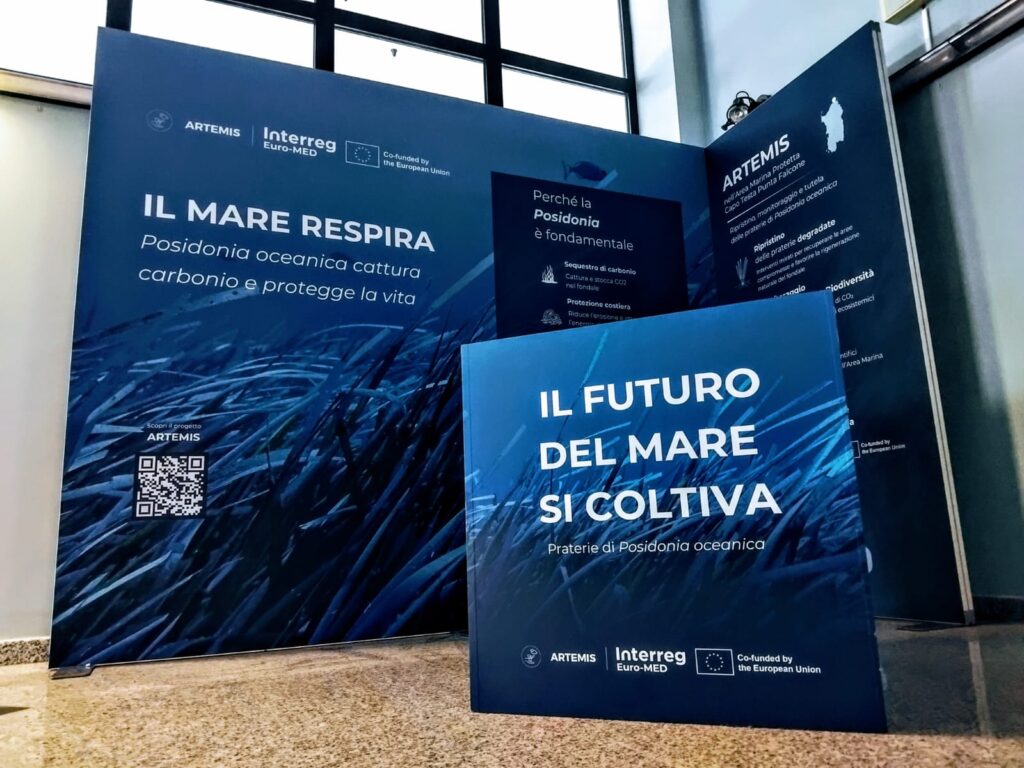
Artemis Corner
The installation presents the project, the benefits provided by Posidonia oceanica and the actions that residents, boaters and visitors can take to protect seagrass meadows.
Visible to passengers travelling between Sardinia and Corsica across the Strait of Bonifacio, the corner provides a further opportunity to raise awareness throughout the year and extend the impact of ARTEMIS Village beyond the three-day event.