
After a rich day presenteing the ARTEMIS project’s achievements (read) we focused the last day on one hard question:
What will it actually take to grow this?
Two high-level roundtable discussions brought together public authorities, businesses, researchers and civil society representatives to examine the future of restoration financing, governance and collaboration across the Mediterranean. The question driving both sessions was the same: how do we scale seagrass restoration beyond project cycles and isolated pilots?
Private Sector Roundtable: Unlocking Investment for Marine Restoration
Moderated by Ramon Scholl of Bax Innovation, the private sector roundtable convened representatives from Borja Alvarez Enriquez Redeia, Lucian Fernandez of MedGardens, Alberto Carpanese of Sea the Change, David Alvarez of Ecoacsa and Ivan Paspalzhiev of EY Denkstatt Bulgaria. The conversation was frank about both the opportunity and the gap.
Most companies still approach sustainability through compliance requirements, reputational considerations or supply-chain pressure — without genuinely integrating the value of nature into strategic decisions. For companies whose activities are directly connected to the seabed, this represents both a risk and an unaddressed responsibility. Several participants noted that, while the corporate debate has evolved from a focus on environmental impact toward a broader recognition of nature-related dependencies and risks, the sustainability manager rarely has the decision-making power to act — and the CEO rarely has sufficient information to do so. Education is necessary but far from sufficient on its own.
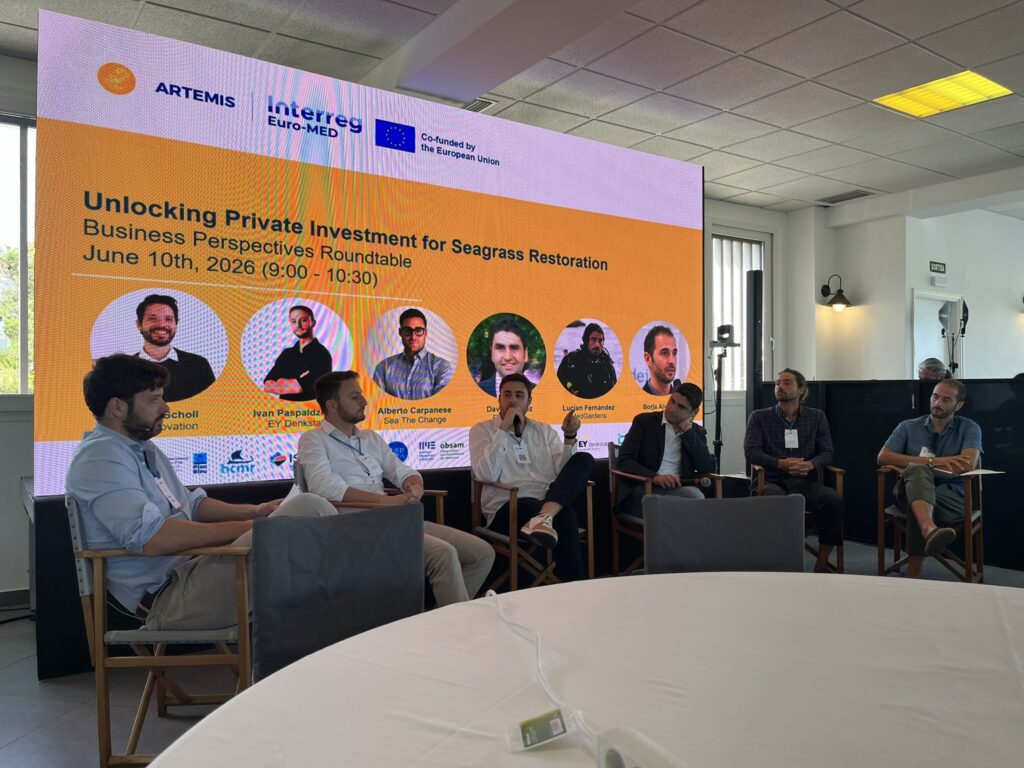
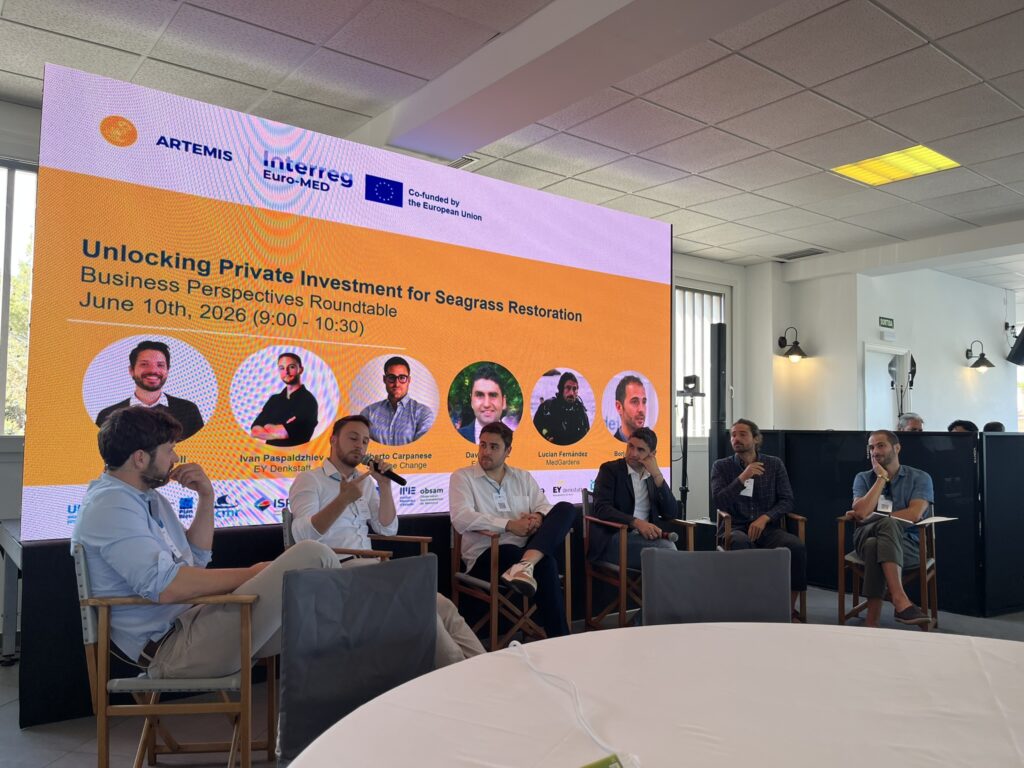
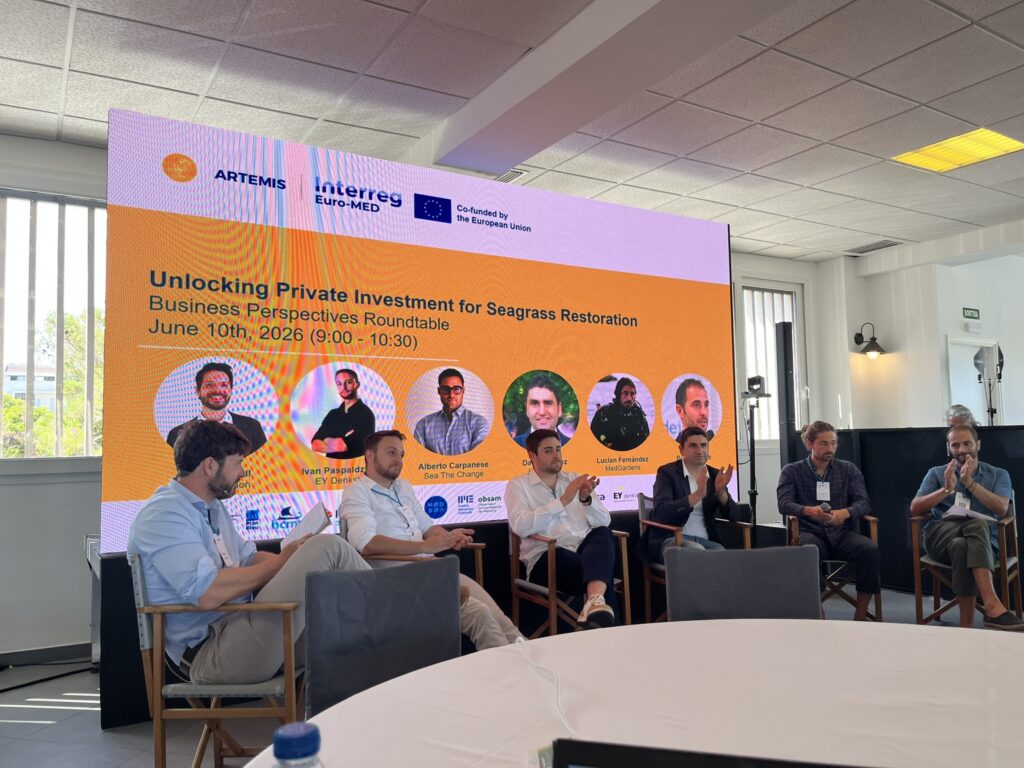
What emerged from the discussion was a set of structural conditions that need to be in place before private investment in marine restoration can scale. Financing models must extend beyond project cycles and connect economic sectors that depend on healthy marine ecosystems — tourism and fisheries among them — with restoration initiatives that generate measurable, verifiable outcomes. Regulatory frameworks, risk management systems and international reporting initiatives such as TNFD (already adopted by 700–800 companies worldwide) are essential drivers. And market-based instruments — nature credits, natural capital approaches — need to be understood as tools toward a larger goal, not as ends in themselves.
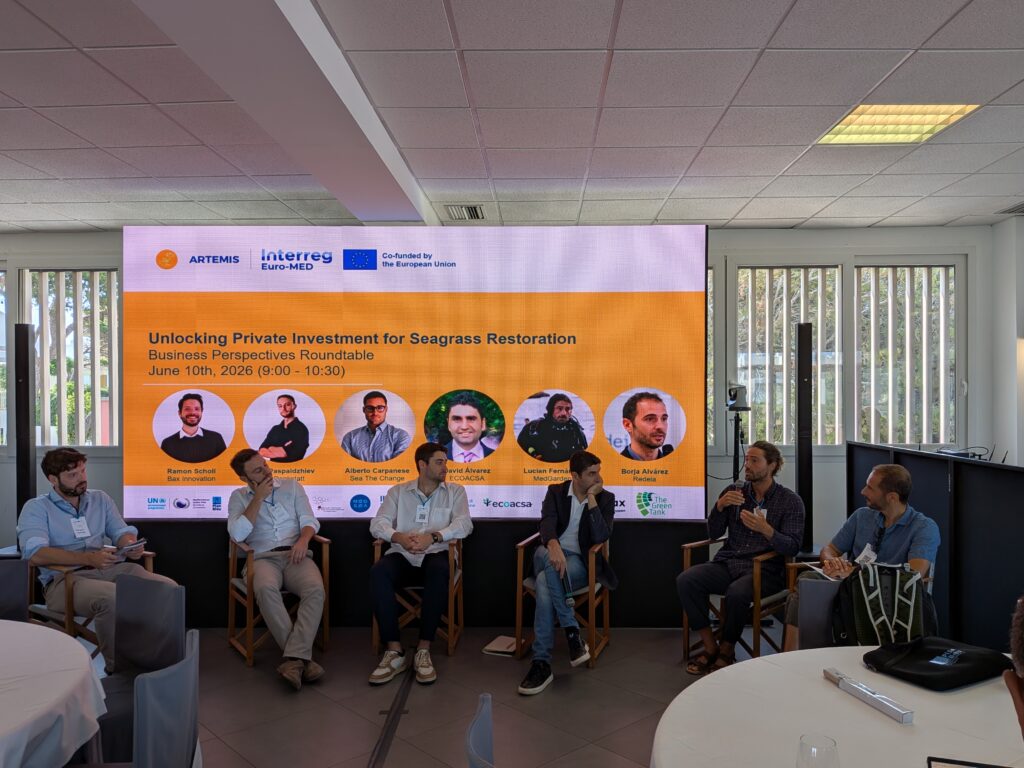
The session closed on a shared conviction: marine restoration cannot scale on public funding or goodwill alone. It requires genuine partnerships between businesses, financial institutions, public authorities and scientific organisations — underpinned by mechanisms that rigorously recognise the value of marine ecosystems and direct resources toward their long-term conservation.
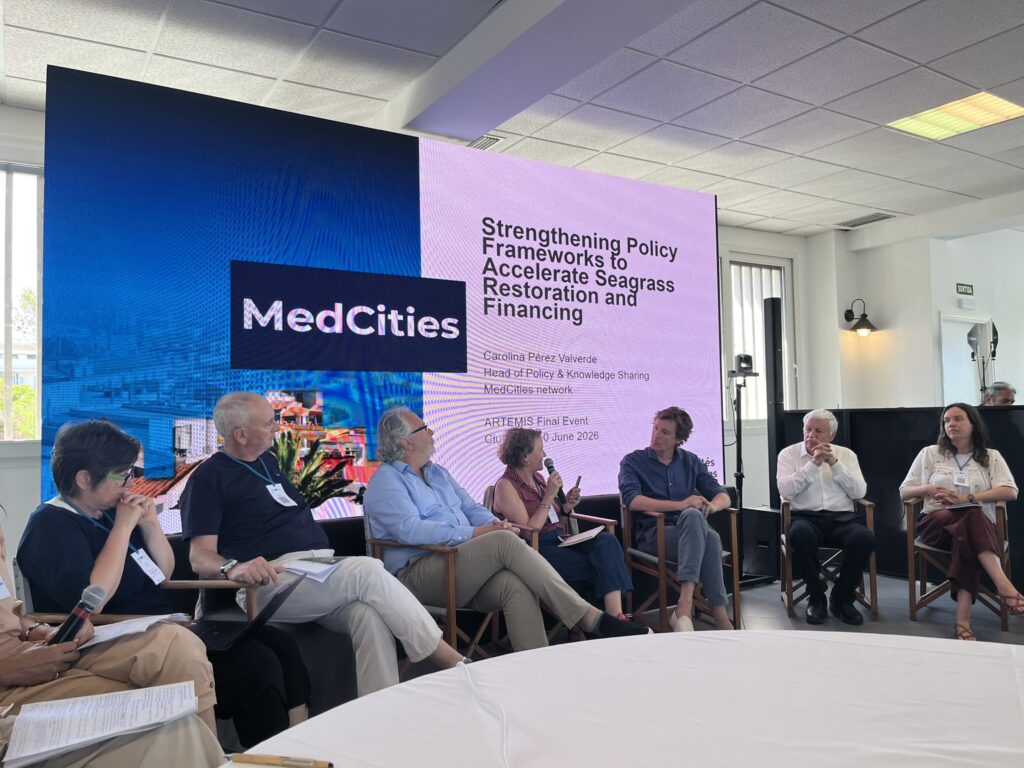
Public Sector Roundtable: Strengthening Governance to Accelerate Restoration
Moderated by Ioli Christopoulou of The Green Tank, the public sector roundtable brought together representatives such as Eva Sahores from the French office of Biodiversity, Marcial Bardolet from the Regional Government of the Balearic Islands, Carolina Pérez Valverde from MedCities, Beatrice Salzani from the Municipality of Monfalcone, Francesca Visintin (eframe), Andrea Rismondo (SELC), Nikolaos Xylouris from the Region of Crete, Georgios Zervakis Mayor of the municipality of Sitia – for a cross-section of the institutional realities shaping seagrass governance across the Mediterranean.
The discussion surfaced a striking diversity of experience. The Balearic Islands offered one of the most developed examples: a dedicated regulatory framework for Posidonia oceanica, supported by monitoring systems, a restoration map to prioritise action, and a dedicated financing mechanism — the tourist tax, introduced in 2016 and yielding €152 million in 2023, a portion of which funds restoration projects directly. Acceptance was hard-won at first, but is now embedded in the region’s political culture.
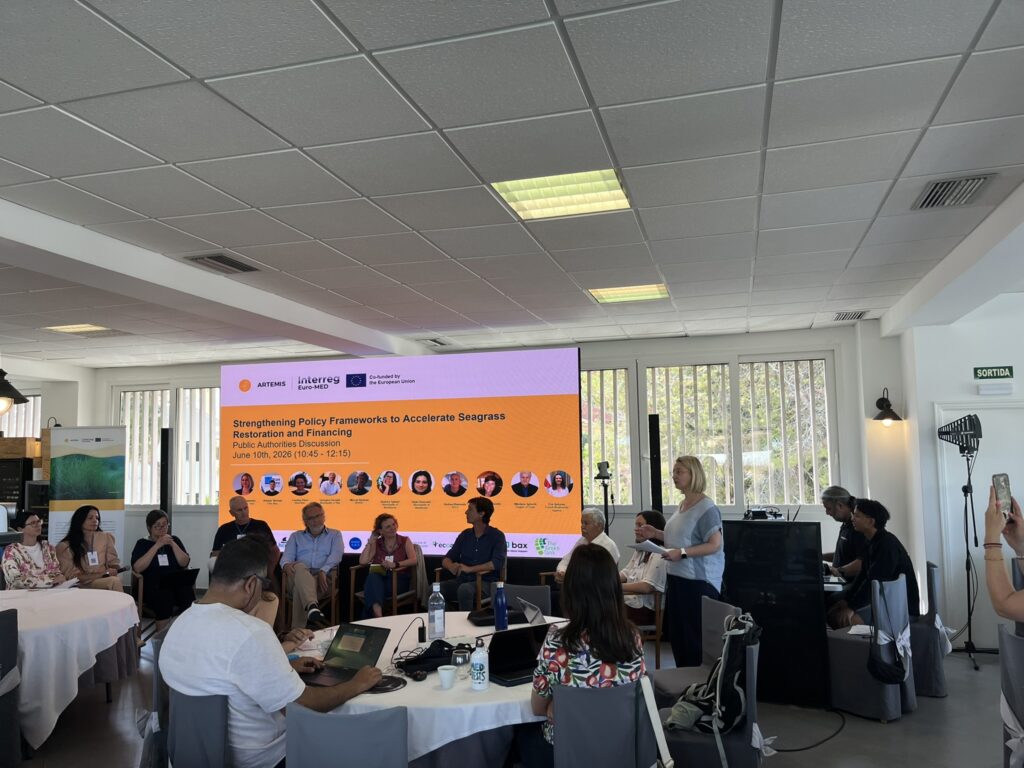
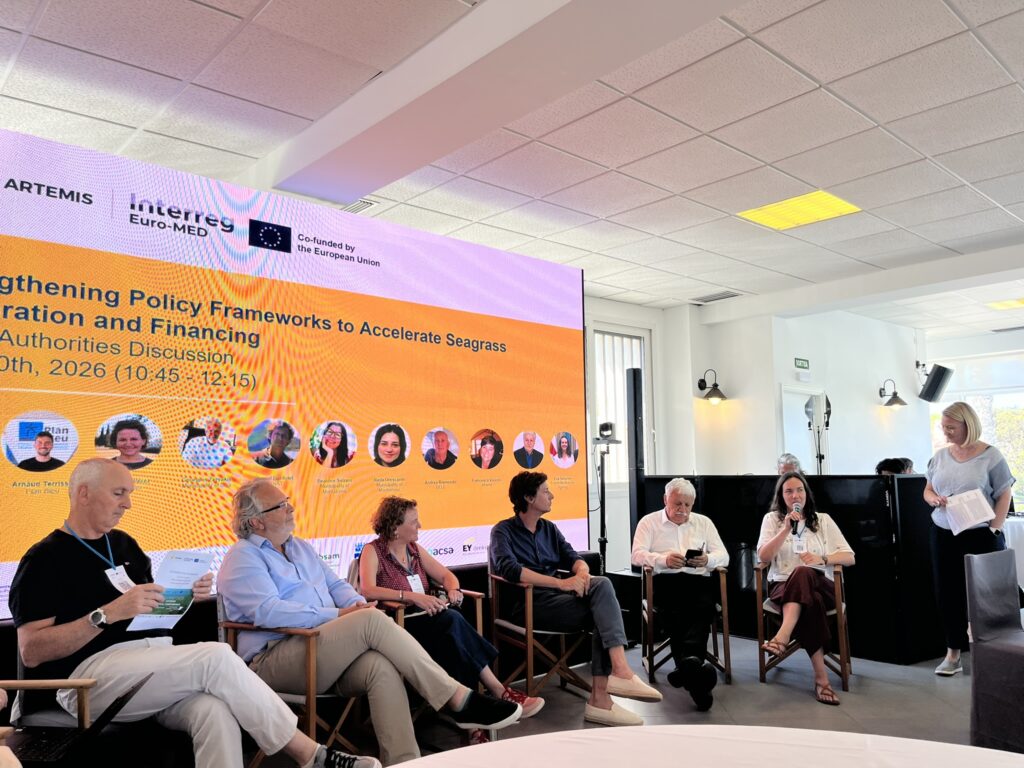
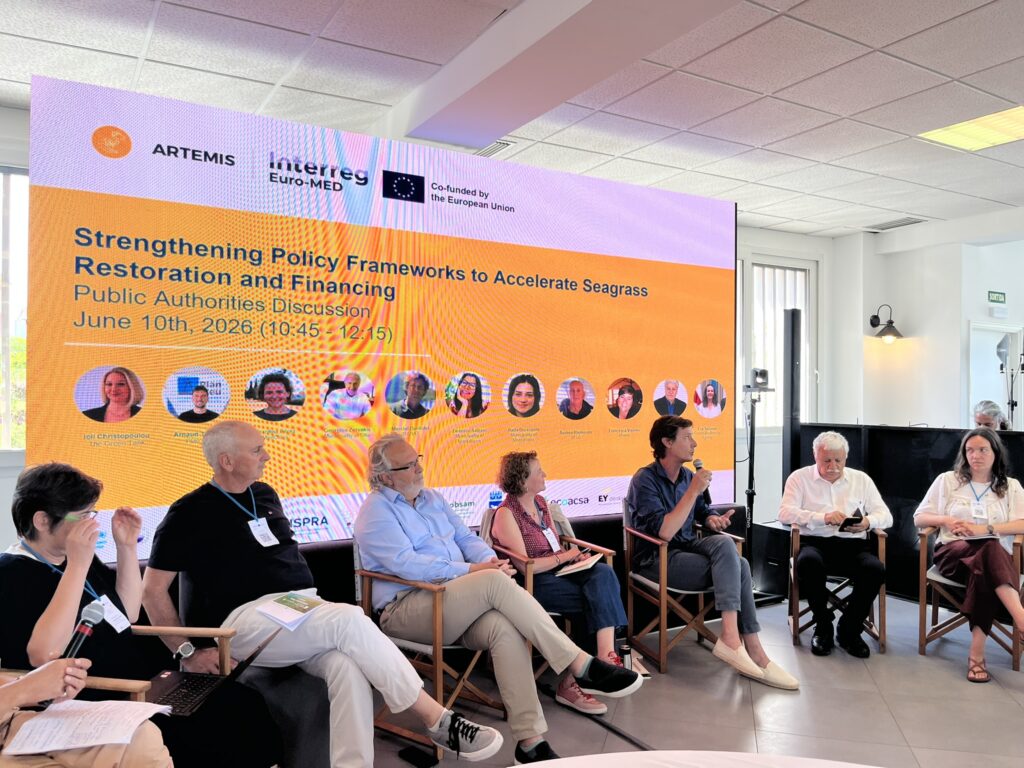
France’s approach centres on what the French Biodiversity Agency now calls “natural preservation” rather than passive restoration — with a focus on eco-mooring as a primary intervention to reduce direct pressure on meadows. The main challenge is not installation but maintenance, alongside the complex governance of rights and responsibilities across different user groups.
MedCities highlighted that marine biodiversity is still a relatively new topic for many Mediterranean municipalities, with very different capacities across its network. Cities in Cyprus, Genoa and Türkiye presented examples of coastal protection and restoration integration — but the gap between awareness and operational capacity remains significant. The network’s role as a knowledge-sharing platform, translating good practice into city-level action, was underscored as essential.
Across all participants, five priorities crystallised: governance (clarifying who is responsible for what, strengthening coordination across fragmented institutional landscapes); regulation (extending protection beyond formally designated areas); planning (moving from general plans to functional zoning based on robust mapping); funding (mobilising both public and private resources in a sustained, long-term way); and engagement (building the broad civic and stakeholder participation that restoration ultimately depends on).
The roundtable closed with a message that echoed across both days of discussion: restoring Mediterranean seagrass ecosystems requires sustained collaboration between science, policymakers, businesses, investors and local communities. No single actor has all the tools. But together, the pieces are in place.
An Afternoon Below the Surface
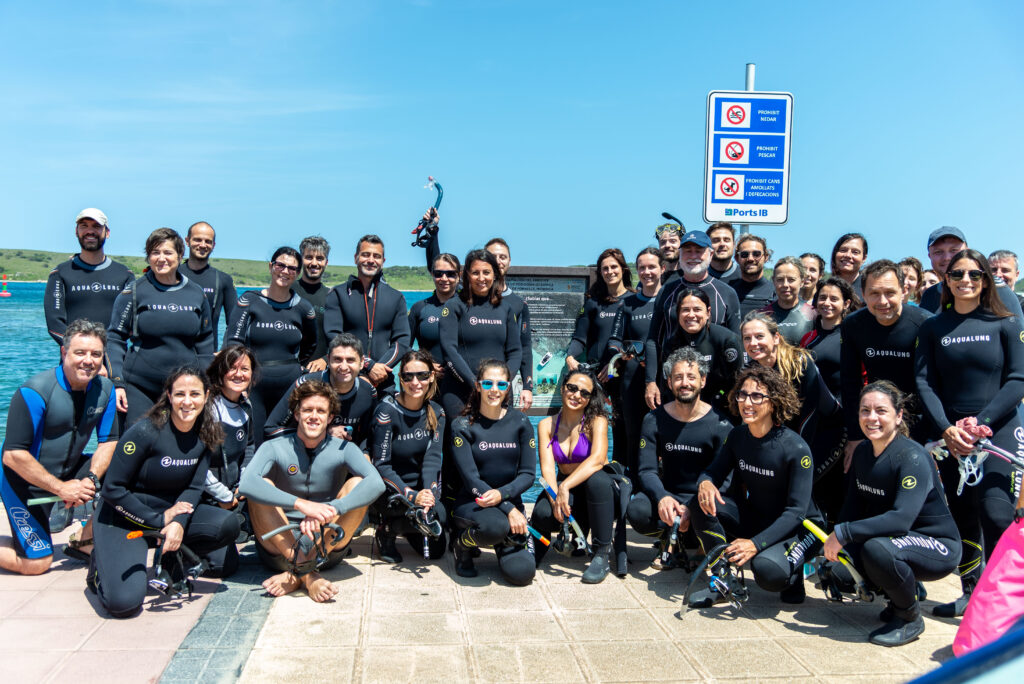
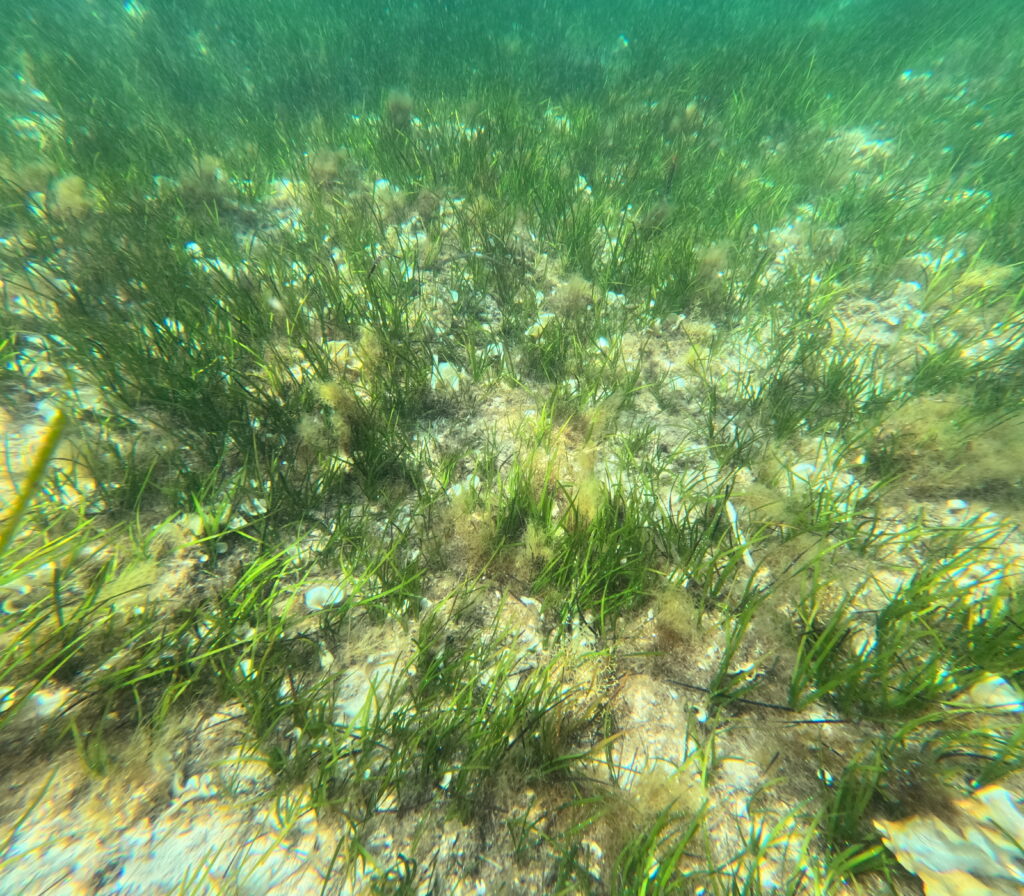
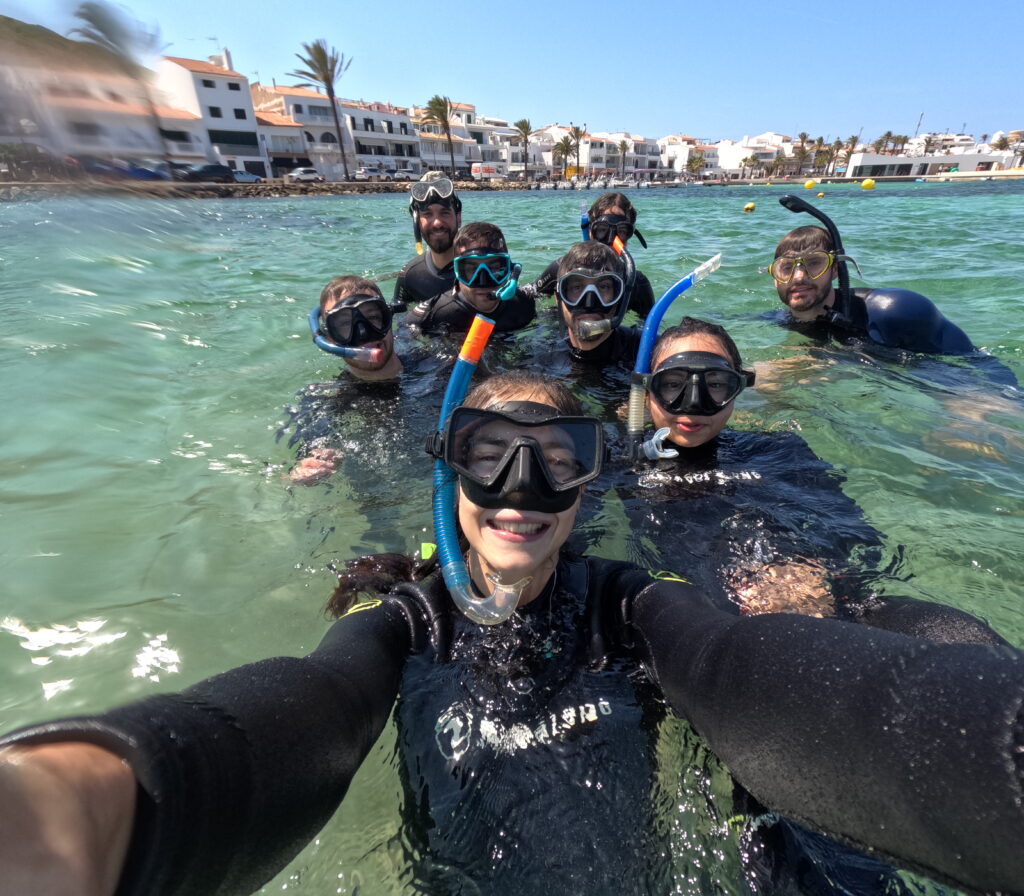
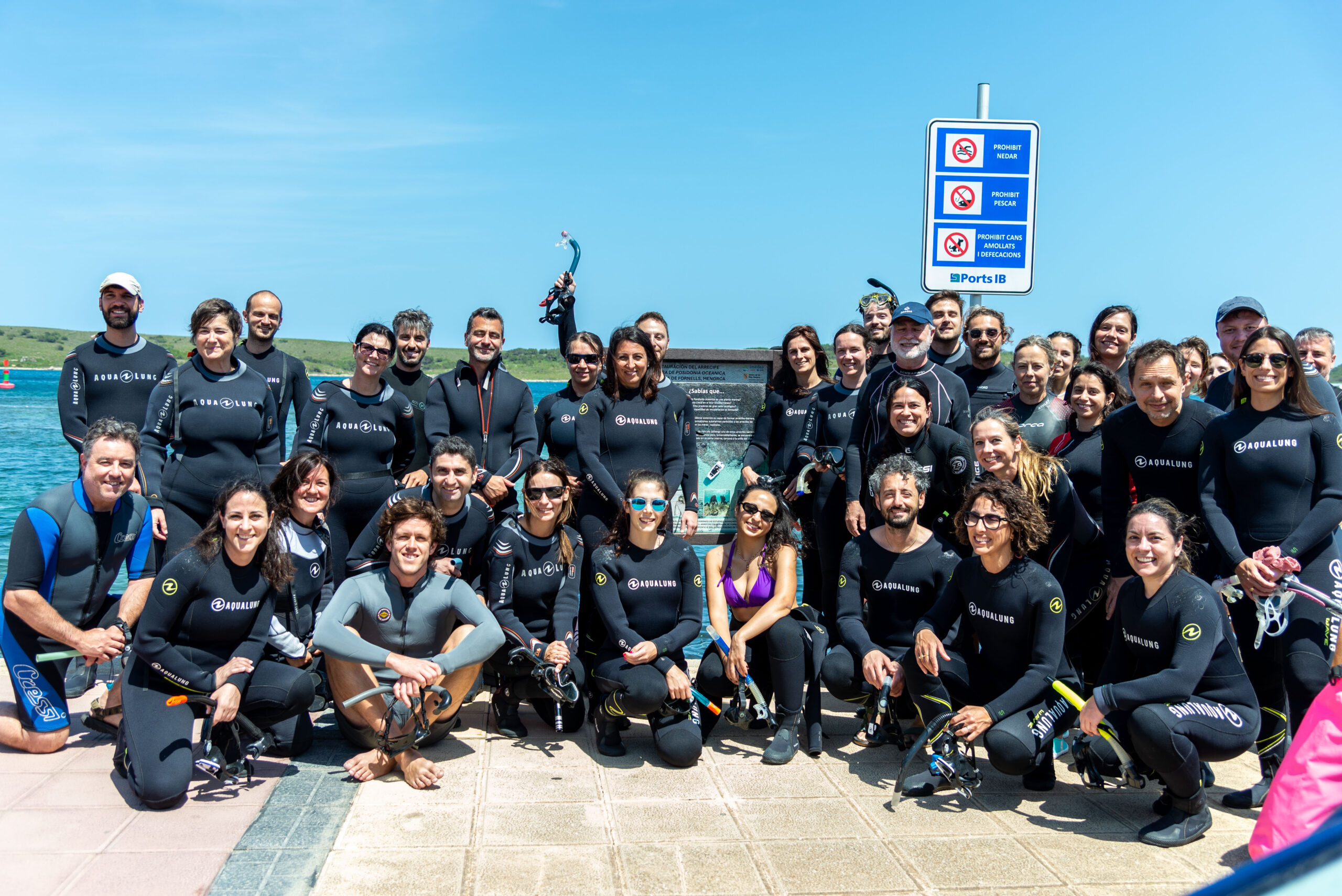
The conference did not end in a meeting room. The afternoon took participants to Fornells, where local project partners [Ime-Obsam] had planted in the past posidonia cuttings. Snorkelling above the meadows allowed us all to witness all what our hard efforts looks like underwater : Restoring home for biodiversity and a cleaner ocean — the slow, living, irreplaceable reality beneath the surface of the Mediterranean Sea.